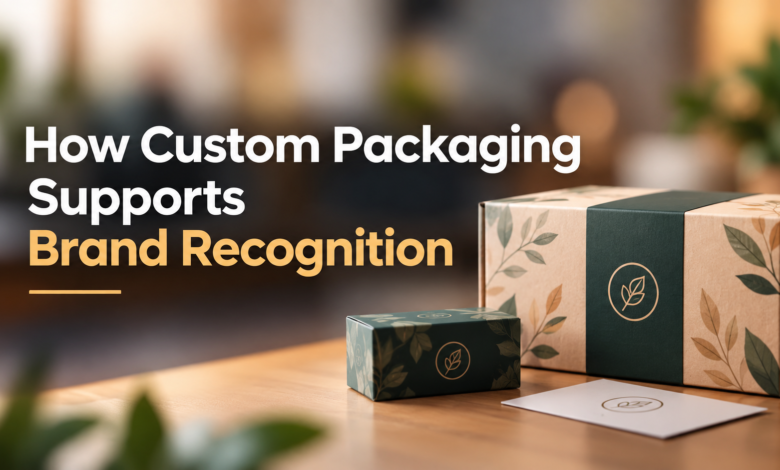
How Custom Packaging Supports Brand Recognition
Why thoughtful packaging design helps businesses stand out, build customer trust, and make their products easier to remember.

Introduction
A customer receives a package, notices its colours, sees the logo, and immediately recognises the business behind it. That small moment matters more than many companies realise.
Packaging is not just something that keeps a product safe. It is also a way for businesses to introduce themselves, communicate their identity, and leave a lasting impression.
For small businesses and established companies alike, custom packaging supports brand recognition by creating a familiar appearance that customers can connect with a particular brand.
From printed boxes and branded bags to personalised labels and carefully chosen materials, every design decision can influence how people remember a product.
What Is Custom Packaging?
Custom packaging refers to packaging designed specifically for a business or product rather than using standard, unbranded materials.
It can include company logos, distinctive colours, printed messages, unusual shapes, branded tissue paper, and product information.
For example, a handmade candle company might use a cream-coloured box with a simple black logo and matching product labels.
A children’s clothing business may prefer bright colours, playful illustrations, and friendly messages.
Both approaches can work because they communicate different brand personalities.
Good packaging does two jobs. It protects the product and helps customers identify the business selling it.
Why Brand Recognition Matters for Businesses
Brand recognition means customers can identify a company through familiar elements such as its logo, colours, product design, or packaging.
Think about walking through a supermarket.
Sometimes, people recognise their favourite products before reading the brand name. They remember the colours, bottle shape, or general appearance.
That familiarity can make shopping decisions easier.
For businesses, strong brand recognition can support customer confidence, repeat purchases, and word-of-mouth recommendations.
However, recognition does not happen overnight. It develops when people repeatedly encounter a consistent and memorable brand identity.
Custom packaging provides another opportunity to build that familiarity.
7 Ways Custom Packaging Supports Brand Recognition
1. Creates a Consistent Brand Identity
Consistency is one of the most valuable features of branded packaging.
When a business uses the same logo, colour palette, and design style across its products, customers begin to associate those details with the company.
Imagine an online skincare brand using soft green packaging with a small white logo.
If the business maintains that appearance across its boxes, labels, and shopping bags, customers are more likely to recognise its products over time.
The packaging starts to feel familiar.
For businesses selling several products, consistency also helps different items appear connected as part of the same brand.
2. Helps Products Stand Out From Competitors
Customers often have several choices when buying similar products.
Packaging can help one product attract attention among those alternatives.
A distinctive box, carefully selected typography, or unusual colour combination may make a product easier to notice.
For example, a tea company could use illustrated packaging inspired by botanical drawings instead of a conventional plain box.
That visual difference may help shoppers distinguish its products.
The goal is not always to create the brightest or most complicated packaging.
Sometimes, a clean design is more memorable than a crowded one.
What matters is having a recognisable appearance that suits the business and its customers.
3. Makes the First Impression More Memorable
For online businesses, packaging is often the first physical interaction customers have with the brand.
Before they touch the product, they see its box, wrapping, or delivery bag.
A damaged, poorly fitted package can create disappointment.
By contrast, secure packaging with clear branding and thoughtful presentation can make the delivery feel more professional.
Consider a customer opening a jewellery box.
A neatly arranged product, protective insert, and small branded thank-you card can make the purchase feel more considered.
These details create an experience customers may remember when shopping again.
4. Communicates Brand Personality
Every business has a personality.
Some brands want to appear luxurious and sophisticated. Others prefer to feel friendly, creative, modern, or affordable.
Packaging design helps communicate these differences without requiring a long explanation.
For example:
- Luxury products: Restrained colours, carefully selected materials, and simple typography.
- Children’s products: Playful illustrations, cheerful colours, and easy-to-read information.
- Natural skincare: Earth-inspired colours, minimal designs, and clearly stated material choices.
- Technology accessories: Structured layouts, precise product information, and modern graphics.
There is no single packaging style that works for every industry.
The best approach reflects the company’s actual identity and matches customer expectations.
5. Encourages Customers to Share Their Purchases
Social media gives packaging another role beyond physical delivery.
Customers sometimes photograph or record products when opening them, especially when the presentation is interesting.
These unboxing posts can introduce a business to people who have never purchased from it.
For instance, a gift business might use a printed box, branded ribbon, and a personalised message.
A customer who enjoys that presentation may choose to share it online.
That creates an opportunity for additional brand exposure without the business placing another advertisement.
Of course, attractive packaging does not guarantee social media attention. Product quality and the overall customer experience still matter.
6. Builds Familiarity and Customer Confidence
People often feel more comfortable purchasing from businesses they recognise.
A consistent packaging design makes it easier for returning customers to identify products they have bought before.
It also shows that a company pays attention to how its products are presented.
Professional packaging cannot prove that a product is high quality. However, it can contribute to a more organised and credible appearance.
Clear product information, readable labels, and accurate descriptions are especially important.
Customers should be able to understand what they are purchasing without struggling to read the packaging.
7. Keeps the Brand Visible After Purchase
Some packaging remains useful even after customers remove the original product.
Strong storage boxes, reusable bags, and attractive containers may stay in homes for weeks or months.
Whenever customers see these items, they may encounter the business name again.
For example, a reusable shopping bag with a distinctive logo can expose other people to the brand while the customer carries it.
Similarly, a decorative product box may remain on a shelf.
This continued visibility can reinforce brand familiarity beyond the initial transaction.
However, reusable packaging should have a genuine purpose rather than simply encouraging customers to keep unnecessary materials.
Important Elements of Effective Custom Packaging
A memorable package usually combines several design features.
| Packaging Element | How It Supports Branding |
|---|---|
| Company logo | Helps identify the business |
| Brand colours | Builds visual consistency |
| Typography | Communicates personality and improves readability |
| Package shape | Helps distinguish a product |
| Materials | Influences appearance, protection, and customer experience |
| Printed messages | Communicates useful information and brand values |
| Labels | Supports product identification and clarity |
Businesses should consider how these elements work together rather than treating them as separate decorations.
A beautiful logo will not achieve much if it is difficult to read or printed poorly.
Likewise, attractive packaging loses value when it fails to protect the product.
How Small Businesses Can Use Custom Packaging on a Budget
Custom packaging does not always require expensive printing equipment or complicated box designs.
Small businesses can begin with affordable changes and expand as their sales increase.
One practical approach is to use standard boxes combined with custom-printed stickers.
Branded labels can add a recognisable identity to plain shipping materials without requiring fully printed packaging.
Businesses can also use tissue paper in their brand colours, simple thank-you cards, or stamps featuring their logo.
For online sellers, consistency matters more than the number of decorative items included.
A neat package with one clearly displayed logo may work better than several unrelated designs.
It is also worth comparing suppliers, minimum order quantities, printing methods, and delivery costs before purchasing large quantities.
Ordering a sample first can prevent costly mistakes.
The Role of Sustainable Packaging in Brand Image
Packaging choices can also communicate how a company approaches waste and material use.
Some businesses choose recyclable cardboard, reusable containers, or packaging with reduced material requirements.
These choices may appeal to customers who care about environmental impact.
However, sustainability claims should be accurate.
A cardboard box is not automatically the most environmentally responsible choice in every situation. Product protection, transport, local recycling facilities, and material sourcing all matter.
Businesses should avoid vague claims such as “100% environmentally friendly” unless they have reliable evidence to support them.
Clear information about what materials are used and how customers can dispose of them is generally more useful.
Good packaging balances product safety, customer convenience, branding, and responsible material use.
Common Custom Packaging Mistakes to Avoid
Even an attractive design can create problems when practical details are overlooked.
Using too many colours: An overcrowded design can make important information difficult to identify.
Poor logo placement: A tiny or badly positioned logo may reduce brand visibility.
Choosing unsuitable materials: Packaging should protect products during storage, handling, and delivery.
Ignoring readability: Small fonts and weak colour contrast can frustrate customers.
Changing designs too frequently: Constantly replacing familiar colours or visual elements may make products harder to recognise.
Adding unnecessary packaging: Extra layers increase expenses and may create avoidable waste.
The strongest packaging choices balance appearance with functionality.
How to Measure Whether Your Packaging Is Working
Businesses should not assume a packaging redesign is successful simply because it looks attractive.
Customer feedback can provide useful evidence.
For example, a company could show customers several unlabelled packaging designs and ask which brand they recognise.
It can also compare customer responses before and after introducing a new design.
Other useful measures include packaging-related complaints, damaged deliveries, repeat purchasing patterns, and unsolicited customer feedback.
Social media mentions may offer additional information, although they should not be treated as proof of increased brand recognition.
When comparing results, businesses should consider other changes such as pricing, advertising, and product availability.
Testing small design changes before placing a large order is often the safer option.
Final Thought
Custom packaging does more than carry a product from a business to a customer.
It gives companies a chance to communicate who they are, create a familiar visual identity, and make each purchase more memorable.
A recognisable logo, consistent colour scheme, practical materials, and thoughtful presentation can all contribute to stronger brand awareness.
Businesses do not need the most expensive packaging to make a positive impression.
They need packaging that customers can recognise, understand, and trust.
When the design reflects the brand and works well for the product, even a simple box can become a valuable part of the customer experience.
Frequently Asked Questions (FAQs)
1. How does custom packaging help brand recognition?
Custom packaging uses recognisable elements such as logos, colours, and design styles. Repeated exposure to these elements can help customers identify a business more easily.
2. Is custom packaging important for small businesses?
Yes. Small businesses can use packaging to establish a consistent identity, appear more professional, and distinguish their products from competitors.
3. What is the difference between custom and standard packaging?
Standard packaging generally uses ready-made designs and sizes. Custom packaging includes features selected for a specific brand, such as printed graphics, personalised labels, or specially designed boxes.
4. Can custom packaging increase customer loyalty?
It can contribute to a positive customer experience and reinforce brand familiarity. However, loyalty also depends on product quality, service, pricing, and customer satisfaction.
5. Which packaging materials are best for branding?
The right material depends on the product. Cardboard, paper, glass, metal, and other materials can all support branding when they provide suitable protection and presentation.
6. Is custom packaging expensive?
Costs vary according to materials, printing methods, design complexity, and order quantity. Small businesses can begin with branded stickers, labels, or stamps to control expenses.
7. Does packaging design influence buying decisions?
Packaging can influence how customers notice and evaluate products. Its appearance, information, convenience, and recognisability may all contribute to purchase decisions.
8. How often should a company redesign its packaging?
There is no fixed schedule. Businesses should consider redesigning packaging when it no longer meets customer needs, creates practical problems, or fails to represent the brand accurately. Familiar design elements should be retained when they remain valuable.